The short answer
It depends entirely on what you're holding. The honest reality is that most concert posters people own — modern tour posters, venue merch, and the reprints sold by the millions — trade for a few dollars to maybe $20. They were printed in large runs, they're widely available, and there are simply more of them than collectors who want them.
The exciting part is the long tail. An original 1960s San Francisco psychedelic poster, a scarce vintage gig poster, or an early letterpress card for a now-legendary band can jump to hundreds, low thousands, or in the rarest cases tens of thousands of dollars. Age alone doesn't do it. What actually moves the needle is whether the piece is an original first printing, who the artist was, which band it advertised, and what condition it's in. Get those straight and you can place almost any poster within a sensible range.
Below is the same checklist a longtime poster dealer runs through — starting with the one question that matters more than all the others — followed by the fastest way to get a current collector value for a specific poster.
Original printing vs. reprint — the question that decides everything
Before anything else, you have to know whether your poster is an original first printing or a later reprint. This single distinction can change value by a hundredfold, and it's where almost everyone goes wrong.
The classic example is the Bill Graham Fillmore and Avalon series. Those posters were issued in numbered runs — the Fillmore series carries a BG number (BG-1, BG-2, and so on), and the Avalon series an FD number. Crucially, popular designs were reprinted again and again over the years. A genuine first printing of a desirable design can be worth many times a second, third, or later printing of the exact same artwork. Collectors track these printings obsessively, distinguishing them by tiny differences in paper stock, color, trim size, and the printer's marks along the edge.
A few things separate originals from reprints. Paper: originals were printed on period stock that has usually toned slightly with age, while many reprints sit on brighter, whiter, more modern paper. Size: reprints are frequently a slightly different dimension than the original — even a half-inch off is a tell. Registration and detail: originals show crisp color registration and fine line detail; cheap reprints can look soft, muddy, or show a coarse dot pattern under a loupe. Added marks: a copyright line, a "reprint" notation, or a printer's credit the original never carried is a giveaway. None of these is foolproof on its own, which is exactly why a careful, combined read matters.
The great eras and styles
Value clusters around a handful of eras and movements. If your poster belongs to one of these, it's worth slowing down and looking closely.
1960s San Francisco psychedelic
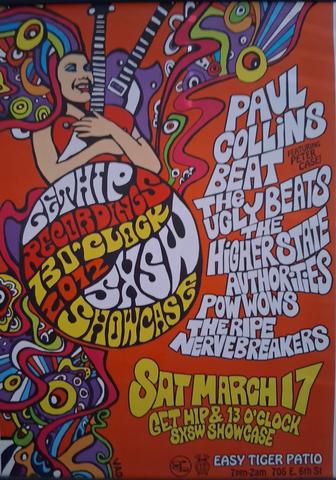
This is the heart of the market. The Fillmore, Avalon, and related dance-concert posters of 1966–1971 are the founding works of psychedelic art, and the names matter enormously: Wes Wilson (the flowing, melting lettering), Victor Moscoso (vibrating complementary colors), Rick Griffin, and the partnership of Stanley Mouse & Alton Kelley (the Grateful Dead skeleton-and-roses among them). An original first printing by one of these artists, advertising a major band, is the blue-chip end of the hobby.
"Boxing-style" letterpress gig posters
Before and alongside the psychedelic scene, countless shows were advertised with letterpress posters printed on heavy card — bold block type, a photo or two, loud colors — in the same style used for boxing matches and country shows (Hatch Show Print in Nashville is the famous shop). Early letterpress posters for soul, R&B, blues, and rising rock acts can be genuinely scarce and valuable, precisely because they were ephemeral and rarely saved.
Modern silkscreen art posters
The contemporary gigposter scene revived hand-printed silkscreen posters as limited-edition art. These are made in small numbered editions, often signed by the artist, for specific shows. The best examples by sought-after poster artists hold real value on the secondary market — though here, too, the question is whether yours is an original numbered edition or an open-edition reprint.
What drives value
Several factors stack together. The more a poster has working in its favor, the higher it climbs.
Signs a concert poster could be valuable
If your poster shows one or more of these, look closer before you set a price — these are the markers that separate a keepsake from a genuine collectible:
- A printing code or series number. A BG number (Fillmore), FD number (Avalon), or similar catalog code identifies a tracked, collectible series.
- A recognizable artist's style or signature. The melting lettering of Wes Wilson, Moscoso's vibrating color, or a Mouse & Kelley design — a signature in the artwork is a strong sign.
- A major 1960s band on the bill. Grateful Dead, Jefferson Airplane, the Doors, Hendrix, Big Brother, and their peers anchor the most valuable posters.
- Period-correct paper and exact original size. Toned, era-appropriate stock at the documented original dimensions points toward a first printing.
- A scarce early letterpress gig poster. Heavy card, bold block type, soul/R&B/blues or early rock acts — ephemeral and rarely saved.
- A signed, numbered silkscreen edition. A modern hand-printed poster with an edition number and artist signature, by a sought-after gigposter artist.
Red flags that lower value (or mean it's a reprint)
Be honest with yourself here — most posters that turn up are reprints, and that's fine, but it's worth knowing. A great design loses ground fast when the piece is a reproduction or the original has been damaged.
- Modern reproductions. Brighter-than-period paper, a coarse dot pattern under a loupe, an added copyright line, or a printer's credit the original never had.
- "Fillmore" reprints. Popular designs were reprinted many times; a later printing of a famous poster is worth a fraction of the first printing of the same image.
- Trimming. A poster cut down to neaten the edges or fit a frame is considered altered and loses significant value, even when genuine.
- Tape, tack holes, and pinholes. Expected wear, but tape stains, tears, and a peppering of holes all subtract from what collectors will pay.
- Fading and sun damage. Washed-out color is especially costly on psychedelic posters, where the explosive color is the whole appeal.
How to find out what YOURS is worth
You can run the whole checklist by hand — but the fastest path is to let the concert poster analyzer read the piece for you. To get an accurate result, how you photograph it matters a great deal:
- Photograph it flat. Lay the poster on a flat surface and shoot straight down so the whole image is square and undistorted — not at an angle or curling off a wall.
- Capture the printing codes. Get a clear, close shot of any BG or FD number, edition mark, copyright line, or printer's credit along the edges — this is what separates an original from a reprint.
- Capture any artist signature. If a signature or monogram is worked into the artwork, photograph it clearly — it can identify the artist and confirm an original design.
- Use good, even light. A window on an overcast day beats flash, which blows out color and hides the surface detail that tells an original from a copy.
Upload your photos and the analyzer identifies the poster, attributes the artist and era, reads any series number or printing code, weighs whether it reads as an original printing or a reprint, and returns a current collector value estimate based on band, artist, printing, and condition. The estimate reflects what collectors are currently asking for comparable posters — a live read on the market, not a guess.
New to all this and staring at a tube of rolled posters or a box of mixed finds? Our guide on where to start with an inherited collection walks through sorting and triaging a pile of items. The same originals-vs-reprints thinking applies to old movie posters, too. And you can browse every topic in the value guides index.