The short answer
Yes — but most of them aren't worth a fortune. The honest reality is that the vast majority of old postcards trade for somewhere between $1 and $10 each. Common printed views of big cities, generic greeting cards, and mid-century chrome cards are plentiful, and plenty changes hands for pocket change.
The exciting part is the long tail. A real photo postcard of a 1910 main street, an early airplane, a local disaster, or a person at their trade can jump to $50, $200, or well past $1,000. Age alone doesn't do it — a card from 1908 can be worth a dollar while one from 1925 brings hundreds. What actually moves the needle is the combination of type, subject, condition, and the stamp. Sort those out and you can place almost any card within a sensible range.
Below is the same checklist a longtime postcard dealer runs through, followed by the fastest way to get a current collector value for a specific card.
What makes a postcard valuable
Five things drive value. The more of them a card has working in its favor, the higher it climbs.
Real photo vs. printed (RPPC)
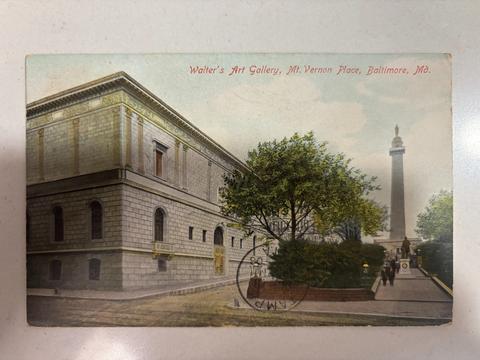
This is the single biggest factor. A real photo postcard (RPPC) is printed from an actual photographic negative onto photo paper — so it's often unique or made in a tiny batch. A printed (lithographed) card was mass-produced by the thousands. Under a loupe, an RPPC shows smooth continuous tone; a printed card breaks into tiny ink dots. Because RPPCs are scarce and frequently show one-of-a-kind local scenes, they're usually the most valuable cards in any box.
Subject matter
Collectors specialize, and certain subjects have deep, competitive followings. A picturesque but generic landscape stays cheap; a documented event, an unusual occupation, or a small town nobody else photographed gets bid up. Subject is often what separates a $3 card from a $300 one.
Age and era
Postcards roughly sort into eras: the Pioneer and Undivided Back years (pre-1907), the Golden Age "divided back" cards (1907–1915, the collecting sweet spot), white-border cards (1915–1930), linen cards (1930s–1950s), and chrome cards (1950s onward). Older generally helps, but era matters most as a dating clue — it tells you what kind of card you're holding and what's plausible for it.
Condition
Condition can swing value by a factor of five or ten. Sharp corners, no creases, bright unfaded color, and a clean image side all add up. A mint card can be worth many times a tired, bent copy of the same image.
The stamp, the publisher, and the artist
Don't ignore the back. A scarce stamp or an unusual cancellation can be worth more than the card it's stuck to. On the front, a known publisher like Raphael Tuck & Sons or an artist signature from Ellen Clapsaddle or Frances Brundage adds a premium on its own — especially on holiday and greeting cards.
Postcard types & rough value ranges
These are general collector-value ranges for typical examples — exceptional cards in any category go far higher, and worn cards go lower.
Subjects collectors pay the most for
If your card shows one of these, look closer before you set a price — these themes consistently pull premiums:
- Disasters & fires. Floods, train wrecks, tornadoes, and burning buildings — documentary RPPCs in this category are perennial favorites.
- Early aviation. Pioneer aircraft, airships, balloon ascents, and named early pilots.
- Occupational portraits. People posed with the tools of their trade — blacksmiths, butchers, telephone operators, photographers.
- Main streets & storefronts. Identifiable small-town scenes with signage, especially named businesses.
- African American and Native American history. Respectfully documented subjects have devoted, competitive collector bases.
- Railroad depots & trains. Station scenes and named locomotives.
- Artist-signed holiday cards. Halloween above all, plus signed Clapsaddle, Brundage, and similar names.
Red flags that lower value
Even a great subject loses ground when the card is damaged. The good news: writing and postmarks on the back rarely hurt — collectors expect a used card to be written on, and a clear postmark can even help. It's damage to the picture that costs you.
- Writing or marks on the image side. Ink, pencil, or grease pencil on the front is one of the biggest value-killers.
- Creases and corner wear. Bends, soft corners, and edge nicks drop a card a full grade or more.
- Trimming. A card cut down to "neaten" the edges is considered altered and loses significant value.
- Fading and sun damage. Washed-out color, especially on linen and chrome cards where bright color is the appeal.
- Album residue, tape, and stains. Corner-mount marks, tape ghosts, foxing, and water stains all subtract.
How to find out what YOURS is worth
You can run the whole checklist by hand — but the fastest path is to let the postcard analyzer read the card for you. To get an accurate result, the photos matter:
- Photograph the front and the back. The back carries the stamp box, the postmark, the publisher line, and the message — all of it feeds the identification and value estimate.
- Use good, even light. A window on an overcast day beats flash, which blows out stamps and glossy surfaces.
- Keep it upright and uncropped. Text should read left-to-right, and the full edges should show so corner condition can be judged.
Upload those two photos and the analyzer identifies the card type, dates it from the printing style and stamp box, reads the stamp and postmark, transcribes the handwritten message, and returns a current collector value estimate based on type, subject, and condition. The estimate reflects what collectors are currently asking for comparable cards — a live read on the market, not a guess.
New to all this and staring at a shoebox? Our guide on where to start with an inherited collection walks through sorting and triaging a pile of mixed items. Collect other things too? The same approach works for Hot Wheels and die-cast cars. And you can browse every topic in the value guides index.