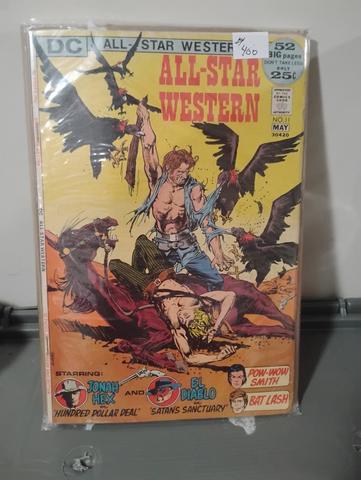
The short answer
Sometimes — but probably not the way you're hoping. The hard truth that surprises most people clearing out a closet is that the comics printed from the late 1980s through the 1990s were overprinted on a staggering scale. Those were the boom years, when buyers snapped up multiple copies of every shiny #1 as an "investment" and tucked them away in bags and boxes. The result: tens of millions of well-kept copies survive, and ordinary ones trade for a dollar or two no matter how old or pristine they are.
The money lives somewhere else. It concentrates in key issues — first appearances of characters who became famous, origin stories, landmark #1s — and it climbs steeply in the earlier ages (Golden, Silver, and Bronze) where far fewer copies survived, and in high grades where the comic looks nearly new. A single great key issue can be worth more than a whole longbox of everything else combined.
Below is the same checklist a longtime comic dealer runs through — what actually drives value, the ages explained, why your stack of 1990s #1s is light on cash, the issues collectors really chase, the red flags, and the fastest way to get a current collector value for a specific book.
What makes a comic book valuable
Four things drive value. The more of them a book has working in its favor, the higher it climbs.
Key issues (the big one)
This is the single biggest factor, and it's why two comics from the same year can be worth $2 and $2,000. A key issue carries a story event collectors single out: the first appearance of a major character, a character's origin, a landmark #1, or a major death. First appearances are the most reliable driver of all — when a character later breaks out in a film or show, demand for the comic where they debuted spikes hard. A non-key issue from the same series is usually worth a small fraction of the key.
Age and era
Comics sort into recognized ages, and older generally means scarcer: the Golden Age (1938–1956), the Silver Age (1956–1970), the Bronze Age (1970–1985), and the Modern Age (1985 to today). The earlier the age, the fewer copies made it through decades of being read, traded, and thrown out — which is exactly why a Silver Age key can outrun a Modern one many times over.
Condition & grading
Condition can swing a key issue's value by a factor of ten or more. Collectors weigh the spine (creases and stress lines), the corners (sharp vs. blunted), and page quality — bright white pages grade higher than brittle tan ones. Serious books go to a third-party grader — CGC or CBCS — which assigns a numeric grade from 0.5 to 10.0 and seals the comic in a tamper-evident case (a "slab"). A high grade on a scarce key can multiply its value dramatically.
Scarcity & print run
Finally, supply. A book is only worth what its rarity and demand together support. Golden and Silver Age comics are scarce because few survived; many 1990s issues are common because publishers printed them by the millions. Low-print-run indies and small-publisher first issues are the modern exception — when something prints in tiny numbers and later matters, scarcity does the work.
The ages, briefly
Knowing which age a comic belongs to tells you what's plausible for it before you ever look up a price. These are the broad collector eras and what they tend to mean for value.
Why your X-Men #1 stack isn't worth much
It's the question every box of inherited comics raises, so let's be honest about it. The early 1990s were a speculation bubble. Publishers leaned into it with foil covers, polybagged variants, and event #1s marketed as instant collectibles — and buyers responded by purchasing multiple copies of each to "save for later."
The numbers tell the story. The 1991 X-Men #1 reportedly sold several million copies. Spawn #1, the various Spider-Man relaunches, and the death-of-Superman issues all moved in enormous quantities, and a huge share of them were immediately bagged, boarded, and stored. Three decades later, those careful owners are exactly the problem: supply vastly outstrips collector demand, so condition barely helps. A near-perfect copy of an overprinted '90s #1 is still common, and common keeps prices low. There are exceptions and standout variants, but as a rule, a thick stack of glossy 1990s first issues is worth far less than its bulk suggests.
Signs a comic might be a key or valuable issue
If your book shows one of these, slow down and look closer before you write it off — these are the signals that separate a key from a common:
- A cover banner shouting a first or a debut. "1st appearance," "First issue," "Origin of…," or a brand-new character introduced on the cover.
- An early age. A price of 10¢, 12¢, or 15¢ in the corner box points to Golden or Silver Age — eras where scarcity alone adds value.
- A famous character making their entrance. A first appearance of a hero or villain who later became a household name is the most reliable value driver there is.
- A genuinely low print run. Small-publisher or indie #1s that printed in tiny numbers — scarcity does the heavy lifting when the character later matters.
- A major death or landmark event. Issues where a significant character dies or a status quo changes draw lasting collector attention.
- High grade on an early book. Bright white pages, sharp corners, and a tight spine on a pre-1985 comic can multiply value many times over.
Red flags that lower value
Even a real key issue loses ground when the book is damaged or isn't what it appears to be. Watch for these — they're the things that quietly turn a "might be worth something" into a reading copy.
- Water and moisture damage. Staining, rippling, and mildew are common in attics and basements and drop a book hard.
- Sun fading and brittle pages. Faded covers and tan, brittle paper signal age and exposure, and both cut the grade.
- Tape, glue, and amateur repairs. Tape on the spine or a glued-back cover is damage, not a fix, and graders penalize it heavily.
- Missing pages or a clipped cover. A missing centerfold, a coupon cut out, or a removed Marvel value stamp can gut the value of an otherwise good book.
- Restoration. Color touch-ups, added pieces, and trimming are noted on graded books and sell at a discount to unrestored copies.
- Reprints and facsimiles. A modern reprint or a clearly labeled "facsimile edition" of a famous issue is common and inexpensive — check the indicia and any cover banners before assuming it's an original.
How to find out what YOURS is worth
You can run the whole checklist by hand — but the fastest path is to let the comic book analyzer read the book for you. To get an accurate result, the photo matters:
- Photograph the cover flat. Lay the comic down and shoot straight on so the whole cover is square in frame and nothing curls or shadows.
- Capture the title, issue number, and the price/date box. That little box in the top corner — the cover price and date — is what pins down the exact issue and age.
- Use good, even light and keep it uncropped. A window on an overcast day beats flash, and showing the full edges lets corner and spine condition be judged.
Upload that photo and the analyzer identifies the title and issue, places it in its age from the price box and printing, flags whether it's a known key issue or a common overprinted book, weighs the visible condition, and returns a current collector value estimate. The estimate reflects what collectors are currently asking for comparable copies — a live read on the market, not a guess.
New to all this and staring at a longbox? Our guide on where to start with an inherited collection walks through sorting and triaging a pile of mixed items. Collect cards too? The same key-issue logic applies to old sports cards. And you can browse every topic in the value guides index.